
Introduction
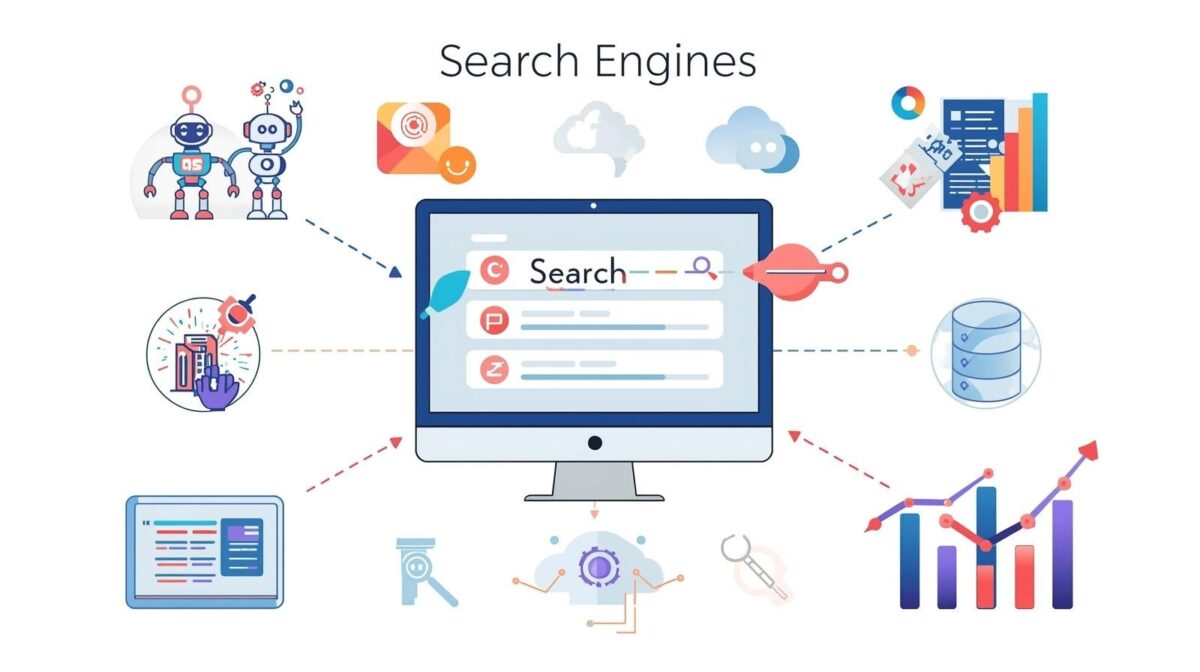
Search Engines are a part of larger complex software systems that help users find information on the web almost instantaneously. Search engines allow you to search for news, learn something new, find some items from shopping sites, and many more; it helps users discover media content among billions of web pages effortlessly. Search engines like Google, Microsoft’s Bing and Yahoo implement advanced technologies to organize information so that it can be accessed quickly when the user enters one or more keywords in the search box. A good knowledge about the way search engines function, can aid users in searching better and assist businesses or content creators to have their websites visible.
What Is a Search Engine?
Search engines are automated systems that facilitate searching for things on the World Wide Web. A search engine performs an index of web pages, as soon as a user submits a query it searches its database and returns the most relevant results. Search engines have a single job to serve relevant, meaningful, and authoritative information based on the search intent.
Crawling: Discovering Web Pages
The crawling phase is the first step in the search engine process. The Internet is explored continuously by automated programs known as “web crawlers” or “spiders” used by search engines. They scan pages of the internet, crawl from one link to another and note what content is on each site. When new pages are created or updated, crawlers check back to keep the search engine’s database current. Crawling millions of webpages that go around to discover billions and understand their structure and semantics are what allows search engines to find your pages on the web.
Indexing: Storing Information
Indexing: refers to the task that follows a page being crawled. The search engine examines the text on a page, including images, headers, keywords and links when it indexes your content. It then records this information in a huge database called an index. The index is like a huge digital library where information is stored for easy access. To appear in search results, a page must be indexed, which means it has been crawled by the bot. Proper indexing ensures that users can find the relevant content when they search.
Ranking: Determining the Best Results
The user types the search query, goes to the search engine that looks for that term on its index and then ranks which pages are most relevant to the query. This process is called ranking. Search engines algorithms take into account hundreds of algorithmic factors when ranking the pages. This could be things like keyword relevance, quality of content, authority of the website, load time of the page, mobile responsiveness and user experience. These pages are displayed at the top of the search results page, because they have been found to correspond best to the user search and therefore may be the most useful.
Search Engine Results Pages (SERPs)
The pages we see after searching is called Search engine results Pages (SERP). On these pages, organic search results are generally mixed with paid advertisements, featured snippets, images and video carousels, maps and location data and other types of specialized content. An ideal search engine provides variety of formats in which results are shown so the user can easily find what (s)he is looking for. As we know, Modern SERPs are produced to resolve inquiries directly on the web page itself and give the people with links to additional thorough material.
The Role of Keywords
Keywords are essential because they help search engines understand the subject of a web page. The algorithm searches for pages with related keywords and concepts when users enter words or phrases in a search engine. Nevertheless that aside, modern search engines work by not only matching (words contained in) keywords and keyword phrases with the user query, but they also have to grasp the context as well or what does this specific query actually mean? This enables them to provide better and more meaningful results.
Conclusion
Crawling, indexing, and ranking are the three main functions of how search engines work. Crawlers find web pages, indexing organizes the information and ranking decides which results are relevant to users. Search engines use advanced algorithms and large databases to retrieve information quickly and effectively from the web. Grasping these core principles can enhance online searching instructs and gives important insight into how information is structured and presented to us on the internet.